
Brakes are one of those things most drivers take for granted until something feels wrong. A slight squeal when slowing down, a longer stopping distance than usual, a subtle vibration through the pedal — these are signals that your braking system is trying to tell you something. The trouble is that many drivers treat these early warnings as minor inconveniences rather than what they actually are: the beginning of a problem that gets more expensive with every mile you delay.
We see this pattern regularly at our workshop in Pershore. A customer comes in for something unrelated — an oil change, an MOT — and we find brake pads worn down to the metal backing plate, scoring the discs underneath. What could have been a straightforward pad replacement turns into a much larger job. This article explains how brakes wear, what the real costs look like, and when to act before a small job becomes a big one.
How to tell your brakes need attention
Brakes don’t fail overnight. They wear gradually, and the system is actually designed to give you clear warnings well before anything dangerous happens — provided you know what to listen and feel for.
The most common early sign is a high-pitched squealing or squeaking noise when you press the brake pedal. This sound comes from a small metal tab called a wear indicator, which is built into the brake pad specifically to make contact with the disc once the pad material gets too thin. It is not a fault — it is an intentional alarm telling you that replacement is due soon.
If you ignore the squeal, the next stage is a grinding or scraping noise, which means the pad material is completely gone and metal is pressing directly against the disc surface. At this point, every metre you drive is actively damaging the disc. Other warning signs include the car pulling to one side under braking, a pulsating or vibrating brake pedal, and increased stopping distances. Any of these symptoms warrants an immediate inspection rather than a wait-and-see approach.
The difference between pads and discs — and why both matter
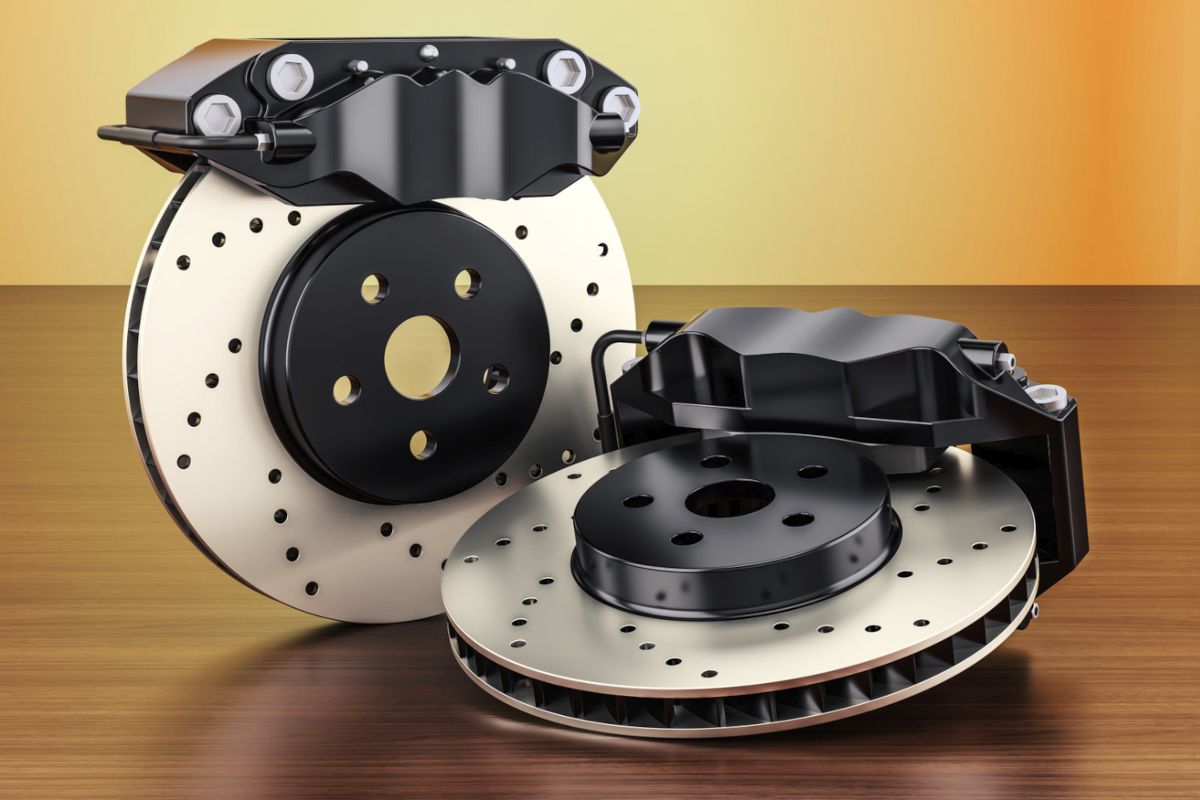
Brake pads and brake discs work as a pair. The disc is a metal plate that rotates with the wheel. The pad is a block of friction material that clamps onto the disc when you press the brake pedal. The friction between pad and disc is what slows your car down.
Pads are a consumable component — designed to wear down and be replaced. Depending on driving style and pad quality, they typically last between 25,000 and 60,000 miles. City driving with frequent stop-start traffic wears pads faster than motorway cruising.
Discs last longer — usually two to three sets of pads per disc — but they are not permanent. Each disc has a minimum thickness specified by the manufacturer, and once it reaches that threshold it must be replaced. Running a disc below minimum thickness is dangerous because it can overheat, warp, or crack under braking.
The key point is this: pads and discs need to be assessed together. New pads on a scored or warped disc will not brake properly and will wear unevenly, creating problems again within months.
What worn brakes actually cost you — the escalation nobody talks about
The real cost of brake neglect is not the repair itself — it is the cascade of damage that occurs when the initial problem is left too long. Here is how costs escalate in practice:
- Replacing brake pads only, when caught at the right time, is the cheapest option. For most cars this costs between £80 and £150 per axle including parts and fitting. The job takes under an hour and you drive away the same day.
- Replacing pads and discs together becomes necessary when worn pads have scored or reduced the disc below minimum thickness. This typically runs between £180 and £350 per axle, depending on the vehicle. It is still a routine job but costs roughly double what pads alone would have been.
- Replacing pads, discs, and calipers is needed when a seized or damaged caliper has been causing uneven wear. Caliper replacement adds another £100–£250 per side, pushing the total bill well above £400 per axle for what started as a simple pad change.
- Additional damage to wheel hubs, ABS sensors, or brake lines can occur in cases of extreme neglect. At this stage, repair costs become unpredictable and can run into the high hundreds — not to mention the safety risk leading up to that point.
The pattern is always the same: the earlier you catch it, the less you pay. Every week of driving on worn brakes moves you one step further down this list.
How much should you expect to pay in 2026
Brake repair pricing depends on your car, whether you need front or rear brakes, and the quality of parts used. As a rough guide for the Pershore area, a front pad replacement on a standard family car costs between £80 and £130. A full front brake service — pads and discs together — comes in between £200 and £320. Rear brakes are usually slightly cheaper, though some modern vehicles with electronic parking brakes require additional labour.
“The most expensive brake job is the one that comes too late. We had a customer last year who drove for weeks with a grinding noise — by the time the car came in, the discs were scored beyond use, one caliper had seized, and the ABS sensor wiring was damaged. The final bill was over £700 on one axle. If they had come in when the squeal first started, it would have been a £120 pad swap. That is the difference early action makes, and it is why we check brakes during every service and MOT — not as an upsell, but because catching it early genuinely saves people money.”
We use quality branded parts because cheap pads and discs wear faster and perform worse in wet conditions. The upfront cost is slightly higher, but the lifespan makes it worthwhile — and we stand behind every job with a proper warranty.
When to book a brake check
If you are hearing any unusual noise when braking, feeling vibration through the pedal, or simply cannot remember when your brakes were last inspected, do not wait for the MOT to find out. A brake check takes fifteen minutes and in most cases costs nothing as part of a routine inspection.
As a general rule, we recommend having brakes inspected every 10,000 miles or once a year — whichever comes first. If you drive mostly in urban stop-start conditions, shorten that interval. And if you have recently bought a used car, a brake inspection should be among the first things on your list.
At PK Motors in Pershore, brake inspections are part of every service and MOT we carry out. If something needs attention, we show you exactly what we have found and give you a clear quote before any work begins. Give us a call on 07731 192 860 or drop in at 6 Lyttleton Road — we are open Monday to Friday, 8 am to 5:30 pm.

Comments are closed